Why Kids Need Yoga
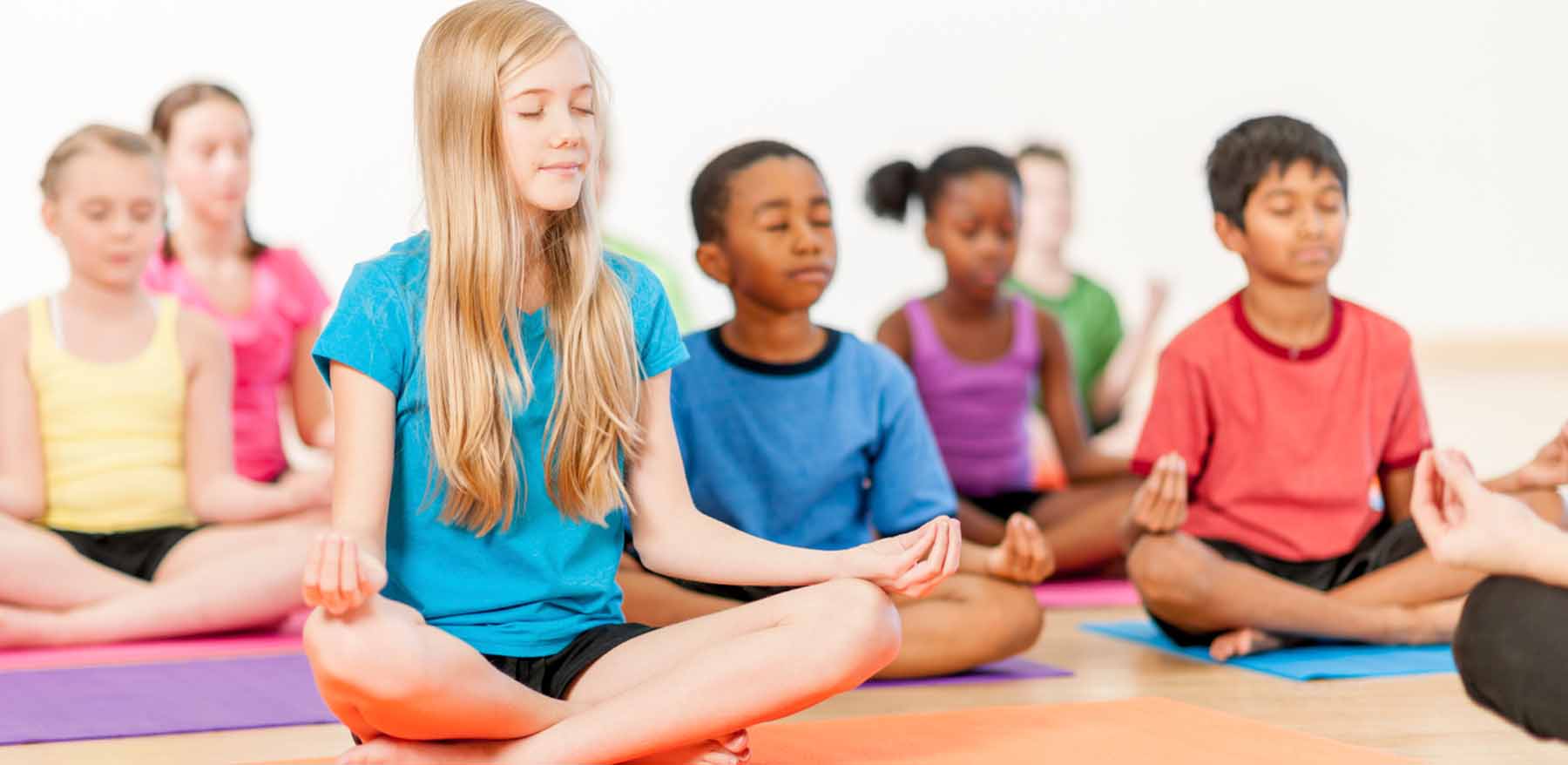
Kids Stoked About Yoga
Want to cultivate better communication, focus, and coping skills in students of all ages? We turned to Rina Jakubowicz from SuperYogis' Schoolhouse for advice on getting kids interested in yoga at home or in the classroom. If you'd like to learn how to empower children through yoga.
Be the example.
This one's easy: Do yoga around them, and they will want to imitate you, says Jakubowicz. Take the opportunity to have fun teaching them poses; the ones with descriptive names, like Tree Pose or Downward-Facing Dog, are always a big hit.
Helpful hint: Don't ever force a kid to do yoga. This will have the opposite of the intended effect.
Make asking (and answering) their own questions an adventure for you both.
A sense of curiosity is a cornerstone of a yoga practice. We come to our mats open to however our mind, body or environment presents itself. And that's difficult for adults: Expectation and a sense of "I already know this" are often obstacles.
But kids easily possess this innate investigative nature, and you can help them develop it to continue to learn and evolve.
"I try to get kids to think for themselves. If they ask me a question, I'll ask them what they think the answer is. When one person says one answer, and the others say something else, I'll address it: 'Do we see there is more than one answer to that question, and is that okay?'" says Jakubowicz.
The a-ha! ability to process more than one answer and accept that there is more than one way to do or consider things puts them in a position of empowerment, helps open their minds, and may also foster more harmonious relationships with classmates and siblings.
Communicate without attaching your own agenda.
"Be aware that you have an agenda to begin with. Most of the time parents impose their beliefs on kids. ('Don't you want to run the family business one day? Don't you want to be a doctor?')," says Jakubowicz. "When you impose your thoughts on how kids should live and what they should aspire to, it only creates pressure, because they have their own agenda."
And while finding themselves is certainly a lifelong process, helpfully navigated by Step 1 (having fun in tree pose) and Step 2 (maintaining curiosity), kids will have no problem telling you who they really are if you offer them space and an authentic connection.
Discover Why Kids Need Yoga
Our children live in a hurry-up world of busy parents, school pressures, incessant lessons, video games, malls, and competitive sports. We usually don't think of these influences as stressful for our kids, but often they are. The bustling pace of our children's lives can have a profound effect on their innate joy—and usually not for the better.
I have found that yoga can help counter these pressures. When children learn techniques for self-health, relaxation, and inner fulfillment, they can navigate life's challenges with a little more ease. Yoga at an early age encourages self-esteem and body awareness with a physical activity that's noncompetitive. Fostering cooperation and compassion instead of opposition is a great gift to give our children.
Children derive enormous benefits from yoga. Physically, it enhances their flexibility, strength, coordination, and body awareness. In addition, their concentration and sense of calmness and relaxation improves. Doing yoga, children exercise, play, connect more deeply with the inner self, and develop an intimate relationship with the natural world that surrounds them. Yoga brings that marvelous inner light that all children have to the surface.
When yogis developed the asanas many thousands of years ago, they still lived close to the natural world and used animals and plants for inspiration—the sting of a scorpion, the grace of a swan, the grounded stature of a tree. When children imitate the movements and sounds of nature, they have a chance to get inside another being and imagine taking on its qualities. When they assume the pose of the lion (Simhasana) for example, they experience not only the power and behavior of the lion, but also their own sense of power: when to be aggressive, when to retreat. The physical movements introduce kids to yoga's true meaning: union, expression, and honor for oneself and one's part in the delicate web of life.