5 Ways to Ground Yourself and Prepare to Teach Kids’ Yoga
Prepare to Teach Kids’ Yoga
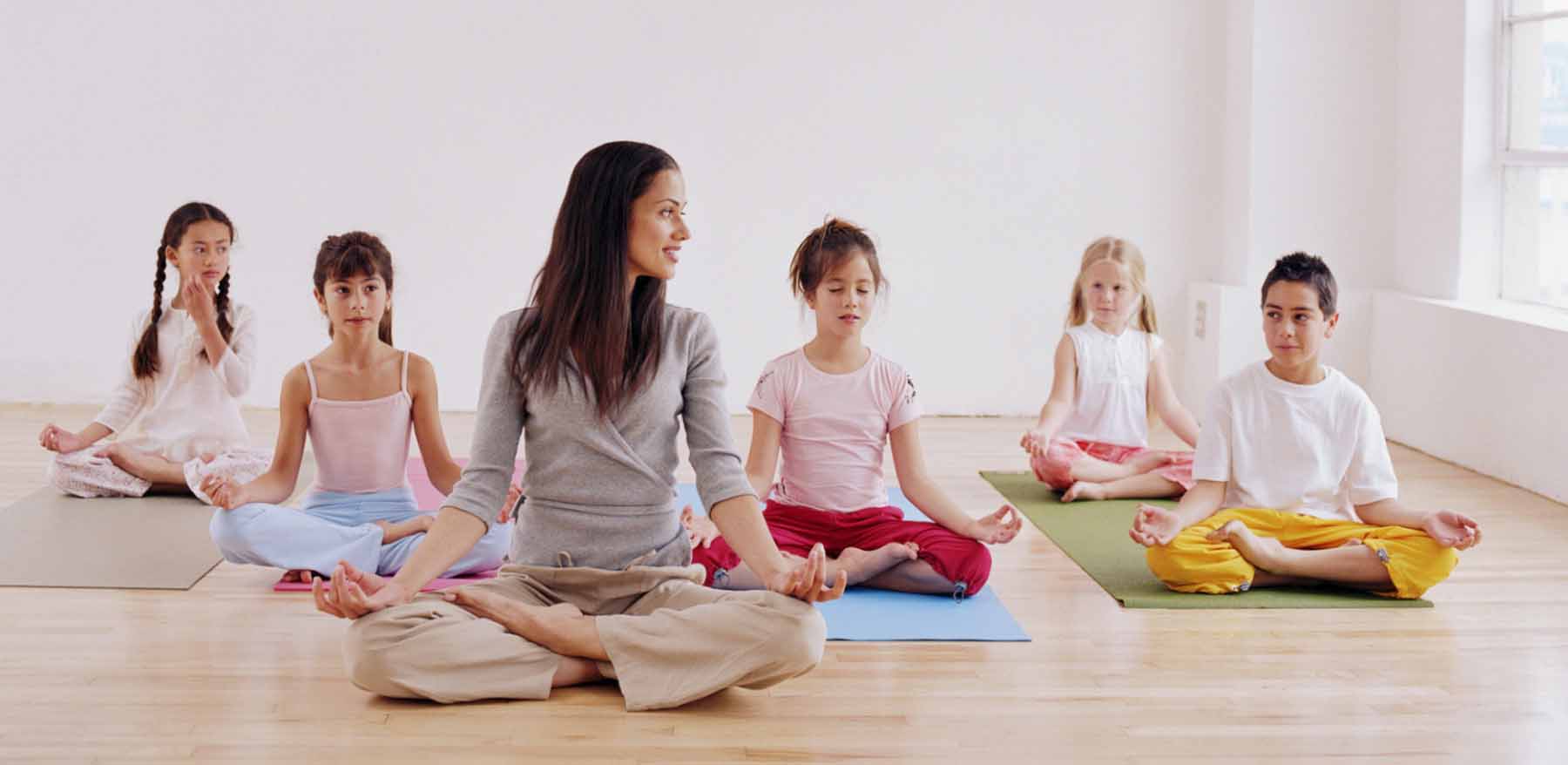
Teaching yoga to kids? Catch your own breath before class, experts say. “Kids’ classes are different from adults’,” says Susan Verde, kids’ yoga and mindfulness teacher and author of the best-selling I Am Yoga children’s book. “There is a lot of conversation and play throughout class. As a teacher, you need to be able to go with the flow and change things up mid-class.” She suggests taking time before class to sit and meditate, focusing on the breath, as a way to ground yourself, connect with yourself, and cultivate calm and kindness.
While preparation is the key to success in so much in life, it’s important to cut your expectations some slack when teaching this ancient practice to young ones. “Have a plan—and an open mind,” Verde suggests. “Creating an age-appropriate class for your kids with a good mix of games, breathing and posture will help you as a teacher feel more organized and confident. That being said, be prepared for your plan to go right out the window, based on the needs and energy of your class. You may find something entirely different works better than your original plan. It’s not perfection, it’s practice—even for a teacher.”
Bedtime Yoga
It's bedtime. The kids are squabbling over bath toys, toothpaste, or nothing at all. Or they’re giddy—stuffed animals and giggles flying around the bedroom. Either scenario, you pine for family bonding, serenity and, sleep. “Sometimes your first impulse is to fight against what’s happening. You know, ‘Everybody, settle down!’ Sure there’s time that is your role,” says Mariam Gates, author of Good Night Yoga: A Pose-by-Pose Bedtime Story. “This book says let’s take that energy and in a very short amount of time, learning how to use the body as a tool, we can settle.”
Presto! Your little one’s eyelids are smooth as silk, as she snuggles her teddy beneath the covers. Along the way, you share your love for yoga and teach your children to feel what’s happening inside their bodies. Good Night Yoga takes you all on a story of settling ladybugs, sparkling stars, and a little blue cat who lives in the moon. Each step of the journey into night has its own pose and breathing exercise that make up a pre-bedtime yoga sequence for kids in early to middle childhood.
“What we’re looking for is a reset button for families,” says Gates, who founded Kid Power Yoga and holds a master’s in education from Harvard University. “We have to teach our kids it’s okay to be disappointed. It’s okay to be sad, angry, happy, proud, excited. All of that is part of this human existence. But we need to be able, at the end of each day, with all those swirling experiences and emotions, to understand that we get to reset.”
In a world where children’s calendars are packed with painting, soccer, girl scouts, and jiu-jitsu, Gates believes it’s vital they learn to let it all go at the end of the day. With Good Night Yoga, kids self-soothe by taking long breaths in and long breaths out, the easiest way to calm the nervous system, Gates says. The book also shows four- to eight-year-olds that they can move their bodies intentionally to release pent-up stress. It includes 11 poses plus a cloud visualization meditation. But, lucky us, Gates and two young yogis are demonstrating the sequence here, just for Yoga Journal. So tonight, roll out your sticky mats or simply spread out on the bedroom carpet. Your children will salute you with the gentle rise and fall of their bellies as they drift into dreams.
Kids Stoked About Yoga
Want to cultivate better communication, focus, and coping skills in students of all ages? We turned to Rina Jakubowicz from SuperYogis' Schoolhouse for advice on getting kids interested in yoga at home or in the classroom. If you'd like to learn how to empower children through yoga.
Communicate without attaching your own agenda
"Be aware that you have an agenda to begin with. Most of the time parents impose their beliefs on kids. ('Don't you want to run the family business one day? Don't you want to be a doctor?')," says Jakubowicz. "When you impose your thoughts on how kids should live and what they should aspire to, it only creates pressure, because they have their own agenda."
And while finding themselves is certainly a lifelong process, helpfully navigated by Step 1 (having fun in tree pose) and Step 2 (maintaining curiosity), kids will have no problem telling you who they really are if you offer them space and an authentic connection.